The ESP32 has one or two built-in I2C controller interfaces, this code provides a VFS interface that can be used by various I2C drivers to access the underlying I2C bus. More...
#include <Esp32HardwareI2C.hxx>
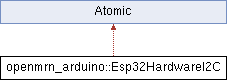
Classes | |
| struct | i2c_device_t |
| Tracking structure used to map file handles to an I2C controller and address. More... | |
Public Member Functions | |
| Esp32HardwareI2C (const char *const path="/dev/i2c") | |
| Constructor. | |
| ~Esp32HardwareI2C () | |
| Destructor. | |
| void | hw_init (const gpio_num_t sda, const gpio_num_t scl, const uint32_t bus_speed, const i2c_port_t port=I2C_NUM_0) |
| Initializes the underlying I2C controller hardware and VFS interface. | |
| void | scan (const i2c_port_t port) |
| Utility method to perform a scan for all devices on the I2C bus. | |
| ssize_t | write (int fd, const void *buf, size_t size) |
| VFS implementation of write(fd, buf, size) | |
| ssize_t | read (int fd, void *buf, size_t size) |
| VFS implementation of read(fd, buf, size) | |
| int | open (const char *path, int flags, int mode) |
| VFS implementation of open(path, flags, mode). | |
| int | close (int fd) |
| VFS implementation of close(fd). | |
| int | ioctl (int fd, int cmd, va_list args) |
| VFS implementation of ioctl. | |
Private Member Functions | |
| int | transfer_messages (const i2c_port_t port, struct i2c_msg *msgs, int num) |
| Transfers multiple payloads to I2C devices. | |
 Private Member Functions inherited from Atomic Private Member Functions inherited from Atomic | |
| void | lock () |
| void | unlock () |
Private Attributes | |
| const char *const | path_ |
| VFS Mount point. | |
| std::vector< i2c_device_t > | devices_ |
| Collection of I2C devices that have been opened. | |
| bool | i2cInitialized_ [SOC_I2C_NUM] |
| Internal tracking for initialization of the underlying I2C hardware. | |
| bool | vfsInitialized_ {false} |
| Internal tracking for the VFS adapter layer. | |
Static Private Attributes | |
| static constexpr TickType_t | I2C_OP_TIMEOUT = pdMS_TO_TICKS(1000) |
| Timeout to use for I2C operations, default is one second. | |
| static constexpr TickType_t | I2C_SCAN_TIMEOUT = pdMS_TO_TICKS(50) |
| Timeout to use for I2C device scanning, default is 50 milliseconds. | |
| static constexpr int | I2C_ISR_FLAGS = ESP_INTR_FLAG_SHARED |
| ISR flags to use for I2C, this defaults to allowing usage of a shared interupt. | |
| static constexpr size_t | I2C_SLAVE_RX_BUF_SIZE = 0 |
| I2C "Slave" RX buffer size, we do not use/support this feature so it is set to zero. | |
| static constexpr size_t | I2C_SLAVE_TX_BUF_SIZE = 0 |
| I2C "Slave" TX buffer size, we do not use/support this feature so it is set to zero. | |
Detailed Description
The ESP32 has one or two built-in I2C controller interfaces, this code provides a VFS interface that can be used by various I2C drivers to access the underlying I2C bus.
Only one instance of this class should be created in the application so the memory overhead is minimized and performance of the VFS minimally impacted.
Example usage (scanner):
Example usage (MCP23017):
Definition at line 82 of file Esp32HardwareI2C.hxx.
Constructor & Destructor Documentation
◆ Esp32HardwareI2C()
| openmrn_arduino::Esp32HardwareI2C::Esp32HardwareI2C | ( | const char *const | path = "/dev/i2c" | ) |
Constructor.
- Parameters
-
path Base path to use for I2C drivers.
Member Function Documentation
◆ close()
| int openmrn_arduino::Esp32HardwareI2C::close | ( | int | fd | ) |
VFS implementation of close(fd).
- Parameters
-
fd is the file descriptor to close.
When this method is invoked it will disable the TWAI driver and stop the periodic timer used for RX/TX of frame data if it is running.
- Returns
- zero upon success, negative value with errno for failure.
◆ hw_init()
| void openmrn_arduino::Esp32HardwareI2C::hw_init | ( | const gpio_num_t | sda, |
| const gpio_num_t | scl, | ||
| const uint32_t | bus_speed, | ||
| const i2c_port_t | port = I2C_NUM_0 |
||
| ) |
Initializes the underlying I2C controller hardware and VFS interface.
- Parameters
-
sda GPIO pin to use for I2C data transfer. scl GPIO pin to use for I2C clock. bus_speed I2C clock frequency. port I2C controller to initialize.
For hardware which supports more than one I2C controller, this method must be called once per controller being used.
NOTE: This must be called prior to usage of any other methods for each I2C controller being used.
◆ ioctl()
| int openmrn_arduino::Esp32HardwareI2C::ioctl | ( | int | fd, |
| int | cmd, | ||
| va_list | args | ||
| ) |
VFS implementation of ioctl.
- Parameters
-
fd is the file descriptor to operate on. cmd is the command to execute. args is the args for the command.
- Returns
- zero upon success, negative value with errno for failure.
◆ open()
| int openmrn_arduino::Esp32HardwareI2C::open | ( | const char * | path, |
| int | flags, | ||
| int | mode | ||
| ) |
VFS implementation of open(path, flags, mode).
- Parameters
-
path is the path to the file being opened. flags are the flags to use for opened file. mode is the mode to use for the opened file.
When this method is invoked it will enable the TWAI driver and start the periodic timer used for RX/TX of frame data.
- Returns
- 0 upon success, -1 upon failure with errno containing the cause.
◆ read()
| ssize_t openmrn_arduino::Esp32HardwareI2C::read | ( | int | fd, |
| void * | buf, | ||
| size_t | size | ||
| ) |
VFS implementation of read(fd, buf, size)
- Parameters
-
fd is the file descriptor being read from. buf is the buffer to write into. size is the size of the buffer.
- Returns
- number of bytes read or -1 if there is the read would be a blocking operation.
◆ scan()
| void openmrn_arduino::Esp32HardwareI2C::scan | ( | const i2c_port_t | port | ) |
◆ transfer_messages()
|
private |
Transfers multiple payloads to I2C devices.
- Parameters
-
port Underlying i2c_port_t to use for I2C transfers. msgs payloads to be transfered, this includes the target device address, data to transfer and length of data. num Number of transfers to perform.
- Returns
- Number of bytes transfered or an error code (negative value).
◆ write()
| ssize_t openmrn_arduino::Esp32HardwareI2C::write | ( | int | fd, |
| const void * | buf, | ||
| size_t | size | ||
| ) |
VFS implementation of write(fd, buf, size)
- Parameters
-
fd is the file descriptor being written to. buf is the buffer containing the data to be written. size is the size of the buffer.
- Returns
- number of bytes written or -1 if there is the write would be a blocking operation.
NOTE: The provided fd is used internally to determine which I2C controller should be used and the address to write the data to. If the address has not been set
Member Data Documentation
◆ devices_
|
private |
Collection of I2C devices that have been opened.
Definition at line 207 of file Esp32HardwareI2C.hxx.
◆ I2C_ISR_FLAGS
|
staticconstexprprivate |
ISR flags to use for I2C, this defaults to allowing usage of a shared interupt.
Definition at line 182 of file Esp32HardwareI2C.hxx.
◆ I2C_OP_TIMEOUT
|
staticconstexprprivate |
Timeout to use for I2C operations, default is one second.
Definition at line 175 of file Esp32HardwareI2C.hxx.
◆ I2C_SCAN_TIMEOUT
|
staticconstexprprivate |
Timeout to use for I2C device scanning, default is 50 milliseconds.
Definition at line 178 of file Esp32HardwareI2C.hxx.
◆ I2C_SLAVE_RX_BUF_SIZE
|
staticconstexprprivate |
I2C "Slave" RX buffer size, we do not use/support this feature so it is set to zero.
Definition at line 186 of file Esp32HardwareI2C.hxx.
◆ I2C_SLAVE_TX_BUF_SIZE
|
staticconstexprprivate |
I2C "Slave" TX buffer size, we do not use/support this feature so it is set to zero.
Definition at line 190 of file Esp32HardwareI2C.hxx.
◆ i2cInitialized_
|
private |
Internal tracking for initialization of the underlying I2C hardware.
Definition at line 210 of file Esp32HardwareI2C.hxx.
◆ path_
|
private |
VFS Mount point.
Definition at line 172 of file Esp32HardwareI2C.hxx.
◆ vfsInitialized_
|
private |
Internal tracking for the VFS adapter layer.
Definition at line 213 of file Esp32HardwareI2C.hxx.
The documentation for this class was generated from the following file: